Monday, December 19, 2016

Introduction to ethnography


This semester we are finishing I had the subject Introduction to Etnography, that was rather a subject about practical or applied subjects than on theoretical aspects, We mainly review ethnographic reflection, practice and writing as well as the position as an ethnographer in the field work and some key concepts such ethnic, contexts, alterity and the “Cultural Other”, which allow us to situate our field work and the subsequent approach and analysis of the information found.

It's a subject I liked because in almost two years of career we hadn't had subjects focused on ethnographic work and because we could do our own ethnography doing a field work during a week, making a trip to Chol-chol commune near Temuco, to know more about the conflict between the Medical Legal Service of the sector and the Mapuche communities in defense of their community cemeteries and their funeral practices, however once visited the place and known more the alleged conflict this was not so obvious, which gave us another look on the subject. Summarizing both the subject and the field work as experiences where I personally learned a lot.

Friday, December 2, 2016

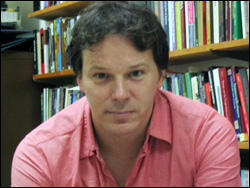
David Graeber


David Graeber is an anthropologist and American anarchist activist.And it has contributed, on the one hand, since he has linked to the anthropology and ethnography, with the anarchist thought, because it's the only discipline that directly studies the way of life of non-state and egalitarian societies, and on the other hand, contributes to the proposal that if the anthropologist proposes and is creative, it can be a great contribution to social change, retaining a political and commitment role, since much of the social tragedies incited by politicians is due to a lack of imagination can be considered the way of life of tribal societies in which there is no inequality, abuse of power, theft or competition.


Imagen relacionadaIt’s important today for his political activism as for his contribution to socially and politically committed anthropology, as well as for his publications and to be a university professor. I met Graeber because of a book I read called "Fragments of anarchist anthropology", and I recommend it to know other forms of anthropological thought.

Ethnography


Ethnography it’s a study method used by anthropologists to describe the customs and traditions of a group, which operates in a particular sociocultural environment, is established as a relevant method of study in anthropology with authors such as Malinowski and his emphasis on participant observation, as with Radcliffe-Brown and Evans-Pritchard. And it’s a subject that interests me because I consider it one of the most useful methods for the study of different social groups or communities.
Besides it’s important because it allows us to observe the reality of the study group from their own perspective and worldview, achieving a better understanding of their identity, which is very useful to interpret and analyze the processes that occur in that group.
The application of this method depends on the focus and purposes that they want to give  it, but generally an approach is made to the study group, it’s seen and interact to varying degrees depending on the ethnographer, collecting information in the field notebook for later review and analysis, but you can also record or photograph to complement.
Moreover this method of research isn’t just for exotic or unusual study groups, it can also be used for contemporary social groups or communities within urban spaces such as social camps, malls or fairs to meet the different interactions within the group understood as part of a culture and possessing its own identity. To finish it should be mentioned that although this method of study is initiated and known in anthropology, also used in other disciplines such as sociology or psychology, also many times to make a complete ethnography requires an interdisciplinary work.